
Injury & Recovery
Blister-Proof Your Runs: Shoes, Socks, Lacing & Other Tips
Blisters are not random. They come from friction, moisture, and shoes that do not fit. Fix your shoe fit, socks, and lacing to stop the rub before it starts.
Oct 25, 2026
Reading pace
200 words/min
Duration
14:00 min
Elevation
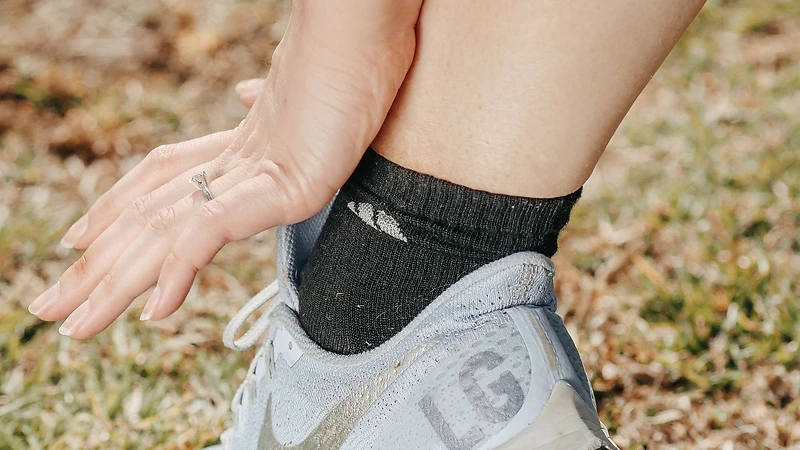
Blisters can turn a fun run into a painful limp. The good news is that most blisters are not “random.” They usually happen when your foot rubs the same spot over and over, especially when there is heat, sweat, and a shoe that does not fit quite right.
This guide will help you stop blisters before they start. We will cover shoes, socks, lacing, hot spots, moisture, and what to do if a blister still shows up.
Find Running Shoes That Minimize Friction and Pressure
Shoes are the biggest factor because they touch your skin for every step. A “good” shoe is not just a popular brand or a high price. It is a shoe that fits your foot shape and holds your foot steady without squeezing it.
Here are simple shoe checks that prevent most blisters:
- Length: You should have about a thumb’s width of space in front of your longest toe when standing.
- Width: Your toes should be able to wiggle. Your foot should not spill over the sides.
- Heel hold: Your heel should feel secure. A tiny amount of movement is normal, but it should not feel like it is sliding up and down.
- Midfoot lockdown: The middle of your foot should feel supported, not loose and not crushed.
- Seams and overlays: Inside the shoe should feel smooth. Any hard edge can rub the same spot for miles.
Also, remember that feet swell when you run, especially on long runs or in heat. A shoe that feels “perfect” at the start can become too tight later.
Identify the Fit Problems That Can Cause Blisters
Most shoe-related blisters come from a small set of fit problems. If you can spot the problem, you can fix it faster.
1) Shoes that are too small
- What it feels like: Toes bump the front. Toenails hurt. The shoe feels “fine” for short runs but gets worse later.
- Common blisters: Tips of toes, top of toes, sides of toes, under toenails.
- Fix: Go up in length or try a roomier toe box. Many runners need a half size bigger than casual shoes.
2) Shoes that are too narrow
- What it feels like: Pinching on the sides of the forefoot. Numb toes. Red marks along the sides.
- Common blisters: Pinky toe, side of big toe, ball of foot edges.
- Fix: Choose a wider size or a model known for a wider toe box. You might also consider changing your lacing technique to alleviate some of the pressure.
3) Shoes that are too big
- What it feels like: Foot slides forward on downhills. You feel like you must “grip” with your toes.
- Common blisters: Under the ball of foot, tips of toes (from sliding), heel (from movement).
- Fix: Try a smaller size, better lacing, or a different model with better midfoot hold.
4) Heel slippage
- What it feels like: Heel lifts with each step. Socks may bunch at the heel.
- Common blisters: Back of heel, sides of heel, Achilles area.
- Fix: Heel lock lacing (covered below), or a shoe with a better heel cup shape.
5) Too much pressure on the top of the foot
- What it feels like: Tightness or pain under the laces. Tingling or numbness.
- Common blisters: Top of foot, near lace rows.
- Fix: Change lacing pattern to relieve pressure across the forefoot and midfoot.
6) Rough spots inside the shoe
- What it feels like: One specific spot always gets irritated, even with good socks.
- Common blisters: Anywhere, but often near the toe box seam or heel lining.
- Fix: Try a different model. You can also use targeted protection on that spot.
Choose Running Socks That Help Protect Your Feet
Socks are your “buffer layer.” Great socks reduce rubbing and manage sweat. Regular cotton socks often hold moisture, and wet skin blisters faster.
A good running sock usually has:
- Synthetic fibers (like polyester or nylon) or merino wool to manage moisture
- A snug fit so it does not bunch
- Smooth seams (or no seams) near the toes
- Extra cushioning only where you need it
Compare Common Running Sock Options
Not all running socks work the same. Here is a simple comparison so you can pick what matches your blister problem.
1) Synthetic running socks (polyester/nylon blends)
- Best for: Most runners, most conditions
- Why they help: They wick sweat and dry faster than cotton.
- Watch out for: Socks that feel slick can still rub if the shoe fit is wrong.
2) Merino wool socks
- Best for: Cooler weather, people who sweat a lot, long runs
- Why they help: Wool manages moisture well and stays comfortable across temperatures.
- Watch out for: Some wool socks are thicker, so your shoes may feel tighter.
3) Thin socks
- Best for: Shoes that already fit snug, hot weather, people who blister from heat and sweat
- Why they help: Less bulk means less squeezing and less heat trapped.
- Watch out for: Less padding if you are sensitive to pressure points.
4) Cushioned socks
- Best for: People who get pressure blisters, long runs, trail runs
- Why they help: Cushion can reduce pressure and spread out impact.
- Watch out for: Extra thickness can make a shoe feel too tight, which can cause new blisters.
5) Toe socks
- Best for: Blisters between toes, toe rubbing, toe crowding
- Why they help: They separate toes, so skin is not rubbing skin.
- Watch out for: Fit matters. If the toe pockets are too long or too short, they can bunch.
6) Double-layer socks
- Best for: People who blister easily and want a simple “set and forget” option
- Why they help: The sock layers rub each other more than your skin rubs the shoe.
- Watch out for: More warmth and bulk.
Quick sock rule: If you keep blistering in the same spot, try changing one thing at a time (sock type, then lacing, then shoe). That way you know what actually fixed it.
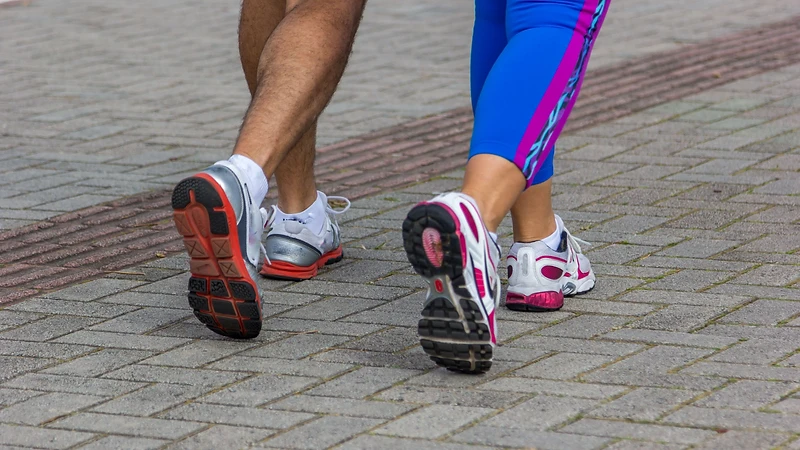

Adjust Your Lacing to Reduce Unwanted Foot Movement
Lacing is an easy fix that many runners skip. Proper lacing can stop sliding, reduce rubbing, and remove pressure points.
Before trying special patterns, do these basics:
- Re-lace your shoes once in a while. Old laces can stretch unevenly.
- Tighten from the bottom up in small steps instead of yanking hard at the top.
- Aim for snug, not painful. Your foot should feel stable, and your toes should still move.
Try Heel Lock Lacing for Heel Slippage
If your heel lifts and rubs, heel lock lacing (also called a runner’s loop) is one of the best tricks you can use.
How to do it:
- Lace your shoe normally until the second-to-last eyelet.
- Instead of crossing over right away, thread each lace end into the top eyelet on the same side to make a small loop.
- Cross the lace ends and thread each end through the loop on the other side.
- Pull down and back to snug the heel into the heel cup.
- Tie normally.
What it does: It holds the heel in place so the back of your shoe is not scraping your skin with every step.
If heel lock lacing makes the top of your foot feel too tight, loosen the eyelets below it a little.
Relieve Pressure Across the Forefoot
If you get pain, numbness, or blisters on the top of your foot, the laces may be pressing too hard.
Here are two simple approaches:
1) Skip an eyelet over the sore spot
- If one area feels like it is being crushed, do not lace through that eyelet pair. Lace around it so there is less pressure right where you need relief.
2) Use “window lacing”
- Lace normally until just before the sore area.
- Instead of crossing over that section, run the laces straight up on each side for one set of eyelets.
- Then continue crossing again above it.
What it does: It creates a “window” of lower pressure on the top of your foot.
Understand Where Running Blisters Develop and Why
A blister is basically your skin’s “alarm system.” When the same spot is rubbed too much, the top layer of skin separates and fluid fills the space. That fluid is your body trying to protect you.
Blisters happen faster when:
- Your foot slides around (movement)
- Your shoe presses too hard in one spot (pressure)
- Your skin is wet from sweat or rain (moisture)
- Your skin is hot (heat)
- Your socks bunch up (wrinkles)
Match Common Blister Locations to Potential Causes
Use this section like a map. If you know where the blister is, you can often guess why it happened.
Back of heel
- Common causes: heel slip, stiff heel counter, wet socks, shoes too big
- Common fixes: heel lock lacing, better-fitting heel cup, moisture control, targeted heel tape
Side of heel
- Common causes: foot not centered, heel rubbing due to side-to-side movement
- Common fixes: snug midfoot lacing, different shoe shape, blister patch on the hot spot
Big toe (side)
- Common causes: toe box too narrow, bunion area rubbing, socks too tight
- Common fixes: wider toe box, toe sock, thin protective tape on the area
Pinky toe
- Common causes: narrow shoe, toes getting squeezed on downhills
- Common fixes: wider shoe, better lacing, trim toenails, toe protection
Between toes
- Common causes: toes rubbing each other, sweaty feet
- Common fixes: toe socks, a small amount of anti-chafe balm between toes, moisture control
Ball of foot
- Common causes: foot sliding forward, socks slipping, shoe too big, too much friction with wet skin
- Common fixes: better lockdown lacing, correct size, thin socks, blister patch in the exact hot spot
Top of foot (under laces)
- Common causes: laces too tight, tongue rubbing, high instep pressure
- Common fixes: window lacing, skip eyelets, try different tongue padding design
Tips of toes
- Common causes: shoe too short, sliding forward, long toenails
- Common fixes: more toe room, heel lock lacing, keep toenails trimmed straight across
Protect Known Hot Spots Before Your Next Run
If you always blister in the same place, do not wait for it to hurt. Protect it before you run, especially on long runs, race days, or wet weather days.
The key is to match protection to the problem. Some products reduce friction. Others reduce pressure. Some do both.
Choose Protection Based on the Problem Area
If the problem is rubbing (friction hot spots):
- Sports tape (like kinesiology tape or athletic tape): Great for heels, sides of feet, and toes when applied smoothly.
- Blister prevention tape (slick tape): Often works well where you need low friction.
- Blister patches (hydrocolloid): Good for protection, but many people use them best on already irritated skin or small blisters.
If the problem is pressure (shoe pushes on one spot):
- Gel pads or cushions: Helpful for bony spots that get sore.
- Felt or foam “donut” pads: You cut a hole so the sore spot sits in the middle with less pressure on it.
If the problem is toes rubbing:
- Toe socks: Separate toes.
- Toe sleeves or toe caps: Protect one toe that always gets hit.
If the problem is moisture plus friction:
- Anti-chafe balm: Helps skin glide instead of grab.
- Foot powder or antiperspirant (used carefully): Can reduce moisture for some people.
Two important tips for tape and patches:
- Test them before a long run. Some adhesives irritate skin, especially in heat.
- Apply to clean, dry skin. Lotion or sweat makes tape peel faster.
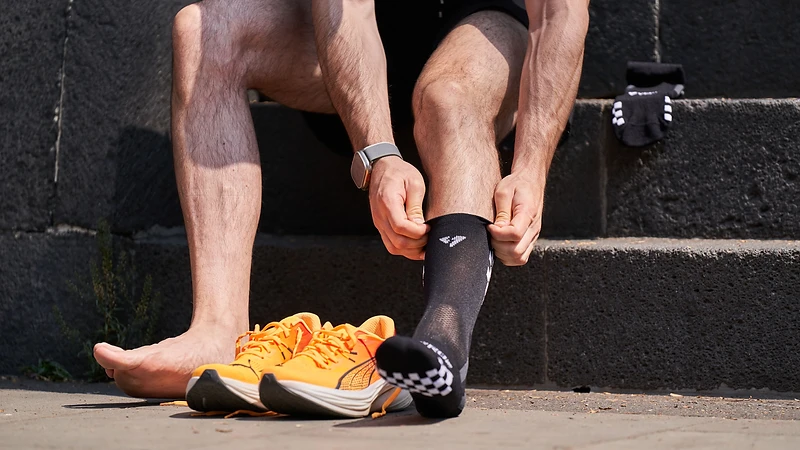

Manage Sweat and Moisture Without Relying on Unproven Tricks
Moist skin blisters faster because it gets soft and rubs more easily. You do not need weird hacks. You need basic moisture control that actually works.
Start with these:
- Wear moisture-managing socks (synthetic or merino).
- Choose shoes with breathable uppers when possible.
- Change socks after the run, and dry your shoes fully between runs.
- If you often run in rain or puddles, accept that your feet may get wet and plan for it.
Adjust Your Foot Care for Hot or Wet Conditions
For hot weather runs:
- Pick thinner socks if your shoes feel warm and tight.
- Use a small amount of anti-chafe balm on known hot spots.
- Make sure shoes are not too small. Heat makes feet swell.
- If your feet sweat a lot, consider foot powder or a mild antiperspirant on the soles. Test first on a short run to make sure your skin does not get irritated.
For wet weather runs:
- Avoid cotton socks. They stay wet.
- Consider merino socks because they stay comfortable even when damp.
- Tighten laces enough to reduce sliding, but do not cut off circulation.
- After the run: take out insoles and let shoes dry fully. Stuffing shoes with paper can help them dry faster.
What not to rely on:
- “Toughen your feet” by ignoring pain. That often ends with a worse blister.
- Random home remedies that sting or burn. If it irritates skin, it can make things worse.
Compare Popular Blister-Prevention Methods
Blister-prevention methods target specific causes of foot irritation, such as friction, moisture, and pressure. By addressing these factors, runners can choose the most effective solutions tailored to their unique needs and running conditions.
| Prevention Method | Potential Benefit | Best For |
|---|---|---|
| Densely padded acrylic socks | May reduce friction and protect the skin during long runs. | Very long-distance runners and runners prone to foot blisters. |
| Neoprene insoles | May reduce friction and shear forces between the foot and shoe. | Runners experiencing recurring blisters on the soles of their feet. |
| Properly fitted running shoes | Reduce excessive foot movement, pressure points, and rubbing. | All runners, especially those experiencing frequent blisters. |
| Heel lock lacing | Helps secure the heel and may reduce rubbing caused by heel slippage. | Runners experiencing heel slippage and heel blisters. |
| Adhesive tape | Protects vulnerable areas from repeated rubbing. | Runners with recurring blisters in specific locations. |
| Anti-friction lubricants | Reduce rubbing in areas prone to friction, such as the toes or heels. | Runners prone to friction around the toes, heels, or other hot spots. |
| Double-layer socks | Allow movement between sock layers, potentially reducing friction against the skin. | Runners who experience irritation from traditional socks. |
| Foot powders and antiperspirants | Intended to manage moisture and reduce dampness inside shoes. | Runners with sweaty feet, although blister-prevention benefits are uncertain. |
If you want the simplest plan, start with: shoes that fit, good socks, and smart lacing. Then add tape or balm only for the spots that still act up.
Treat Existing Blisters Safely and Know When to Seek Help
If you already have a blister, the goal is to protect it, keep it clean, and avoid infection.
If the blister is small and not too painful:
- Wash the area with soap and water.
- Dry it well.
- Cover it with a blister patch or a clean bandage.
- Try not to peel the skin. The “roof” protects the area under it.
If the blister is large and very painful:
- Generally, it’s best to let blisters heal on their own without popping.
- However, if the blister is causing significant pain or hindering movement, it may be necessary to drain it—but this requires extra caution.
- Ideally, seek advice or assistance from a medical professional before attempting to pop a blister to avoid making it worse or causing infection.
Do not ignore signs of infection. Seek medical help if you notice:
- Spreading redness
- Warmth and swelling that gets worse
- Pus
- Fever
- Red streaks moving away from the blister
- You have diabetes, poor circulation, or immune problems (get help early)
Also, if a blister keeps coming back in the exact same place, treat that as a gear or fit problem that still needs fixing.
Make Blister Prevention Part of Your Running Routine
Blister prevention works best when it becomes normal, like tying your shoes. Here is a simple routine you can follow before, during, and after every run.
Before the Run
- Check that your shoes still fit well, keeping in mind that feet swell on long runs.
- Pick socks that match the weather and the distance.
- Use heel lock lacing if your heel slips.
- Tape or protect any spot that has blistered before.
During the Run
- Pay attention to hot spots early.
- Stop quickly if something feels wrong and fix it before it worsens.
After the Run
- Clean and dry your feet thoroughly.
- Treat small hot spots before they turn into blisters.
- Dry your shoes and replace any worn socks.
Over time, you will learn your personal "blister pattern." Once you know your common problem spots, the fix becomes easy and automatic.
If you want a final, simple goal: keep your foot steady, keep your skin dry, and stop rubbing before it turns into pain. That is how you blister-proof your runs.
From page to pavement
Wear the idea you just read
You just learned what your feet actually need. Dress them for it — design the piece yourself.
Design Your Own Running Apparel